You may want to know exactly what happens from hospital admission through anaesthesia, the operation, waking up and going home. By following the sequence, you can prepare for tests, understand possible changes to the plan and recognise which recovery symptoms need prompt medical attention.
Key takeaways
- Expect blood tests, imaging, anaesthesia assessment and consent before theatre.
- A laparoscopic appendectomy uses small abdominal incisions and general anaesthesia.
- Perforation, abscess or peritonitis can require drainage, antibiotics or open surgery.
- Seek urgent advice for fever, worsening pain, vomiting or wound redness after discharge.
Before the operation: tests, consent and theatre preparation
The team confirms the diagnosis, checks your fitness for general anaesthesia, explains the planned operation, and prepares you for theatre. This early part of the appendix surgery process can take longer when pain, dehydration, infection or uncertain imaging requires stabilisation first.
1. A surgeon examines your abdomen and asks when the pain began, where it moved, and whether you have vomited or passed urine. Blood tests check infection, inflammation, anaemia, kidney function and electrolytes. Urine testing helps assess infection and, when relevant, pregnancy; ultrasound or CT may show an inflamed, perforated or abscessed appendix.
2. The surgeon and anaesthetist discuss laparoscopic removal, expected benefits, alternatives and recognised risks, including bleeding, bowel or organ injury, wound infection, abscess, blood clots and anaesthetic problems. Consent also covers conversion to an open operation if severe inflammation, perforation, adhesions, bleeding or unclear anatomy makes keyhole surgery unsafe.
3. You stop eating and drinking for the period the anaesthetist specifies. Staff insert an intravenous line, give fluids, pain relief, anti-sickness medicine or antibiotics when indicated, and check allergies, medicines and previous anaesthetic reactions.
4. Before theatre, staff confirm your identity, operation and consent, ask you to remove jewellery and dentures, and record vital signs. In theatre, monitors are attached, and the anaesthetist gives general anaesthesia with airway support.
What happens during the laparoscopic appendectomy procedure
The surgical team performs the laparoscopic appendectomy procedure under general anaesthesia, so you are unconscious and an anaesthetist supports your breathing with an airway device. Antibiotics are usually given before the first incision.
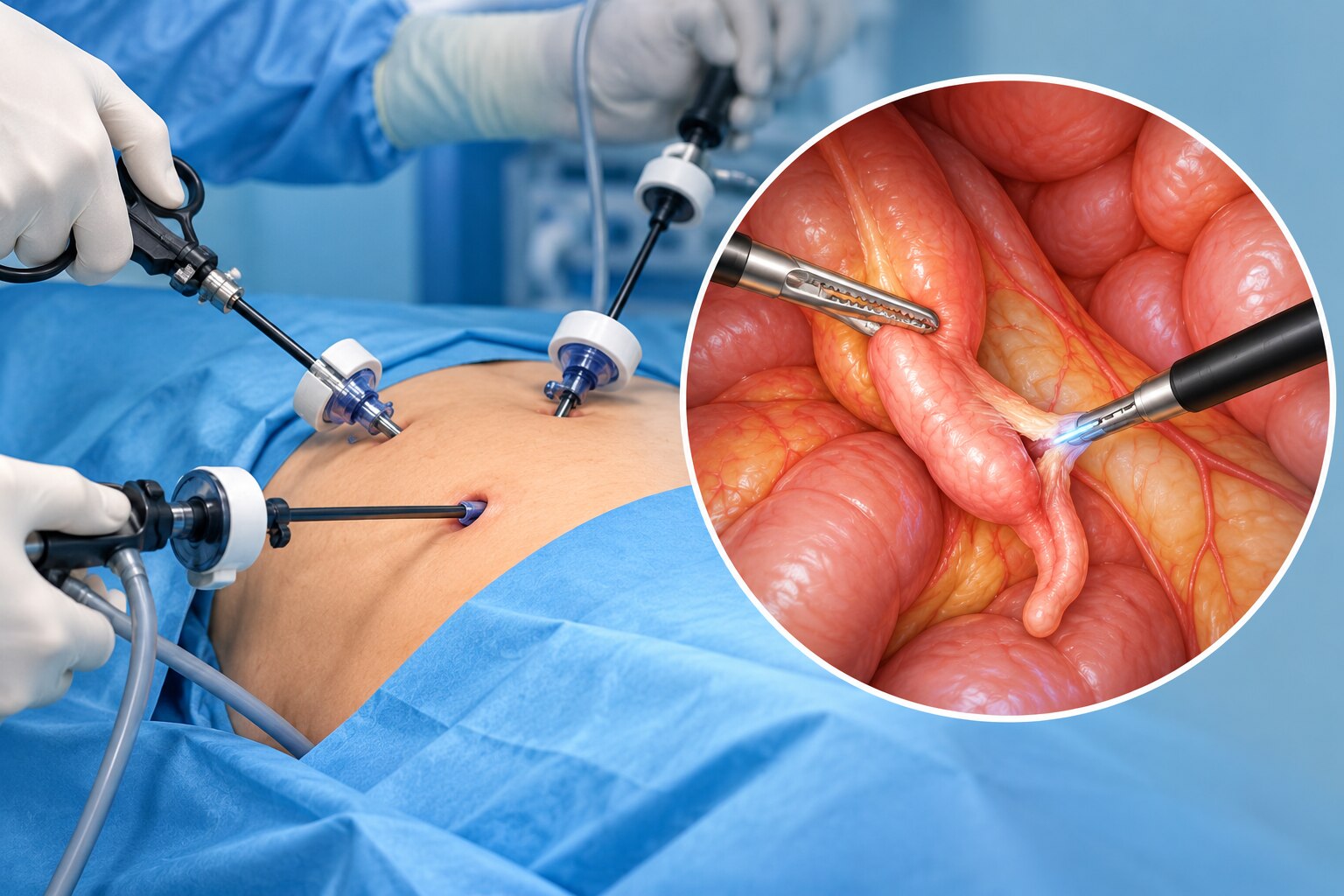
1. The surgeon makes a small incision near the navel and inflates the abdomen with carbon dioxide. This creates working space and allows a camera to show the appendix and surrounding organs.
2. Two additional small incisions are usually made for instruments, although the number and position can change with your anatomy or the findings during surgery.
3. The surgeon identifies the appendix, separates it from nearby tissue, and seals and divides its blood supply. The appendix is then sealed at its base and divided.
4. The removed appendix passes through one of the port incisions, often inside a protective retrieval bag. The team checks the abdomen for pus, bleeding, bowel injury, or leakage from the appendiceal stump.
5. A drain is not routine after an uncomplicated operation. The surgeon may place one when substantial contamination remains or a collection needs continued drainage.
6. The instruments are removed, the carbon dioxide is released, and the small wounds are closed with sutures, clips, or adhesive. If severe inflammation or unsafe visibility prevents laparoscopic completion, the surgeon may convert to an open operation.
When perforation, an abscess or peritonitis changes the plan
A perforated appendix changes the goal from removing the appendix alone to controlling infection and contamination. During the laparoscopic appendectomy procedure, the surgeon examines the abdomen for pus, a hole in the appendix, an abscess and inflammation around nearby organs.
The team may:
- Wash out contaminated fluid and pus after removing the appendix.
- Continue antibiotics after surgery, with duration based on effective source control and your clinical recovery.
- Place a drain selectively if substantial contamination or a residual collection needs drainage.
A localized abscess can require drainage and antibiotics before appendix removal if immediate dissection would injure nearby bowel. Diffuse peritonitis usually requires urgent surgery, although the surgeon chooses the safest approach after assessing the inflammation and your condition.
Severe inflammation, adhesions, bleeding or unclear anatomy can make keyhole surgery unsafe. The surgeon may convert to an open operation through a larger incision; this is a safety decision, not necessarily a complication or failed operation.
Expect a longer operation or hospital stay when infection is extensive. Further antibiotics, image-guided drainage or another operation may be needed if an abscess persists. A routine drain is not required, and the removed appendix is commonly sent for laboratory examination.
Waking up, eating and deciding when you can go home
You may wake feeling groggy, cold or mildly nauseated from the anaesthetic. Soreness around the small cuts, abdominal bruising and tiredness are common; carbon dioxide used during surgery can also cause temporary shoulder-tip pain. These symptoms should gradually ease rather than intensify.
Fluids usually come first. Once nausea settles and your bowel begins moving, you can try light food, then return to your normal diet as tolerated. The appendix is not needed for digestion, so laparoscopic appendix surgery recovery does not require permanent food restrictions. Persistent vomiting or inability to drink needs medical review.
Discharge after an uncomplicated operation is possible later the same day or after an overnight stay when you meet these checks:
- You are alert and your vital signs are stable.
- You can drink without repeated vomiting.
- Tablets control your pain.
- You can urinate and walk safely.
- The surgeon has no concern about bleeding or infection.
A drain is not routine, but substantial contamination or a residual collection can require one and prolong admission. Perforation, an abscess, peritonitis, open surgery or intravenous antibiotics usually means a longer hospital stay and slower recovery. Arrange an adult to take you home and stay with you initially.
Recovery at home: activity, diet and warning signs
Your laparoscopic appendix surgery recovery should become easier each day. Walk short distances several times daily, increase activity gradually, and avoid driving, strenuous exercise, or heavy lifting until your surgeon clears you. Follow the specific lifting limit given at discharge. Drink fluids, then choose small, light meals if nausea or slowed bowels make food difficult.
There is no permanent diet restriction because the appendix is not needed for normal digestion. Take prescribed antibiotics and pain medicine exactly as directed.
Seek urgent medical review for:
- Abdominal pain that is worsening instead of settling
- Fever that persists or returns
- Repeated vomiting, inability to eat or drink, or increasing abdominal swelling
- Pus, spreading redness, or worsening warmth around an incision
- Faintness, breathing difficulty, or failure to pass urine
| Recovery pattern | What you can expect | What needs urgent attention |
|---|---|---|
| Uncomplicated operation | Light activity often returns within several days; tiredness, bruising, and shoulder-tip pain can occur | Pain that intensifies, new fever, or reduced ability to function |
| Perforation, abscess, or peritonitis | Recovery takes longer and antibiotics or a drain may be part of the plan | Fever, vomiting, swelling, or worsening pain after discharge |
| Open conversion or additional abdominal surgery | Follow the surgeon’s longer lifting and work restrictions | Any sudden deterioration or wound discharge |
Contact the surgical team promptly rather than waiting for a routine appointment when a warning sign appears.
Choosing an appendectomy surgeon in Dombivli
Verify more than “laparoscopic” before choosing an appendectomy surgeon in dombivli. Check the doctor’s registration in the Indian Medical Register, surgical training, emergency availability, and whether the hospital can manage perforation without transferring you.
| Check | Why it matters | What to confirm |
|---|---|---|
| Registration | Confirms legal medical registration | Indian Medical Register entry |
| Training | Shows relevant operative preparation | General surgery qualification and experience |
| Emergency care | Appendicitis can worsen quickly | 24-hour surgical and anaesthesia coverage |
| Hospital backup | Complications need immediate support | Ultrasound or CT, pathology, intensive care, drainage and open-surgery capability |
Ask who provides anaesthesia and who reviews you overnight. Dr Sharad Gurav Laparoscopic Surgeon - 9324545771 is one local option to evaluate using the same checks. Confirm how the team handles antibiotics, abscess drainage, conversion to open surgery, and follow-up.
Related service
Laparoscopic Appendectomy Laparoscopic appendectomy is a safe and effective minimally invasive surgery used to remove an inflamed appendix, most commonly due to acute... View service → |
Frequently asked questions
What happens before a laparoscopic appendectomy?
The team confirms the diagnosis, performs blood tests and imaging when needed, assesses fitness for general anaesthesia, takes consent and prepares you for theatre.
What happens during a laparoscopic appendectomy procedure?
Under general anaesthesia, the surgeon makes small abdominal incisions, inserts a camera and instruments, removes the appendix, checks for infection and closes the wounds.
When can you eat and go home after appendix surgery?
You can usually begin with fluids after waking and progress to food as nausea settles and bowel function returns. Discharge depends on pain control, movement, drinking and the absence of complications.
What warning signs need medical advice during laparoscopic appendix surgery recovery?
Contact your surgical team for fever, worsening abdominal pain, repeated vomiting, increasing wound redness or swelling, pus, bleeding, or inability to drink.
Keywords